

Castles & Palaces Connected to Mary Queen of Scots
On the way to booking a private Outlander day tour with Chauffeur Tour Scotland, there is another side of Scotland that quietly pulls your attention in. It’s the story of Mary Queen of Scots' castles that still carry traces of her life across the country.
Mary Stuart was born on 7th December 1542, the daughter of King James V and Mary of Guise. She became the only surviving heir to the Scottish throne and stepped into queenship while still a child.
Even though her reign was short, her path is still deeply tied to some of Scotland’s most powerful castles and royal palaces, which we have listed in this blog post to give you a clear understanding of each as you visit them.
Linlithgow Palace - Birthplace of Mary Queen of Scots
Linlithgow Palace is where it all started. This is the place where Mary Queen of Scots was born in 1542. And back then, it was also a proper royal residence where Scottish kings and queens lived through the 15th and 16th centuries.
On your Scottish Highlands tour or even if you just head out from Edinburgh, this stop is around 25 km away, so you’re looking at roughly 30 minutes by road. Even a short train ride from Edinburgh Waverley gets you there without any stress.
Today, the palace stands in ruins, but it’s still looked after by Historic Environment Scotland. You can actually walk around all four sides, step into the open courtyard, and just take a moment to think of how royal life once moved through these walls.
Stirling Castle - Early Royal Residence and Coronation Site
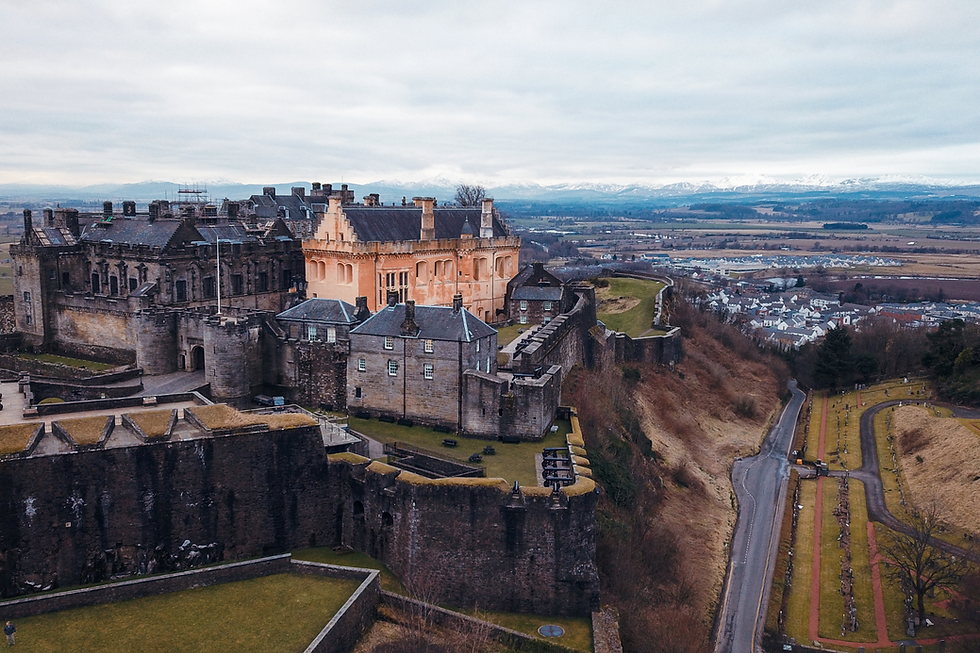
Next comes Mary Queen of Scots' Stirling Castle, which sits in central Scotland, around 60 km from Edinburgh, and it takes roughly an hour to reach by road or rail. It is one of Scotland’s most important strongholds, both politically and historically.
Mary was crowned here in 1543, when she was just a baby, only nine months old. That moment shows how early her life entered the world of power and politics.
Inside the castle, you can walk through the Royal Palace, Great Hall, Chapel Royal, and beautifully restored chambers. The Stirling Heads, carved oak portraits of kings and nobles, still stand out with incredible detail.
Guided tours here help you understand how royal ceremonies worked and why Stirling played such a strong role in shaping Scotland’s monarchy. It also features in many 5-day Scotland tours from Edinburgh, especially for travelers following royal history routes.
Holyrood Palace - Queen of Scotland’s Main Royal Home
Right in Edinburgh, Holyrood Palace was Mary Queen of Scots’ main home after she came back to Scotland in 1561. She lived here as a young queen, and many important moments of her life happened inside these walls.
Inside the palace, she stayed in her private rooms where she met important guests, spoke with advisers, and made decisions for her kingdom. It was also a place where she had to deal with a lot of pressure and difficult situations.
Among all Mary Queen of Scots’ castles, Holyrood feels the most personal because it was her everyday home, not just a place she visited.
Edinburgh Castle - Political Power Center in Her Reign

Edinburgh Castle played an important political role during Mary’s early time as queen in Scotland, especially around 1561 when she returned from France at just 18 years old. Even though she lived mainly at Holyrood Palace, this strong castle still stood as a symbol of royal power and protection for the whole country.
The castle connects closely with Edinburgh Castle, Mary Queen of Scots' history, especially because it held the royal jewels and state records during her time. In 1566, her son James VI was born in Edinburgh Castle, which is also one of the most important royal events in Mary Queen of Scots' castles.
Falkland Palace - Royal Escape into Nature
Not every part of Mary Queen of Scots’ life was about heavy politics and pressure. When things got too intense in Edinburgh, she would often slip away to Falkland Palace in Fife.
At Falkland, the palace was surrounded by royal hunting grounds, and she spent time enjoying falconry and hunting, which were popular royal pastimes in the 16th century.
One of the most talked-about stories from Mary Queen of Scots' castles is how she played tennis here, even in men’s style clothing, which surprised her court. Today, the palace still feels calm, almost like a royal escape frozen in time.
Craigmillar Castle - Quiet Retreat with a Dark Turning Point
Just a short drive, around three miles from Edinburgh city center, Craigmillar Castle sits quietly among green fields, far away from the noise of the city. This place is closely linked with Scotland's castle Mary Queen of Scots' history because she stayed here in 1566 after the birth of her son, James VI, and during a very difficult phase of her marriage with Lord Darnley.
Even today, the castle ruins still stand strong, and it is also known for appearances in films like Outlaw King and the series Outlander, through which you can sense Scotland’s layered royal past.
Sheffield Manor Lodge - Long Period of Captivity in England
From 1570 to 1584, Mary Queen of Scots lived at Sheffield Manor Lodge as a prisoner. She was kept under the care of the Earl of Shrewsbury and moved between different houses, but she was never actually free to keep her word.
This part of her life is important because it was her longest time in captivity. She did not stay in a jail cell, but she still could not go where she wanted or speak freely to many people. Everything she did was watched closely.
Even during these long years, many people in Europe still believed she was a real queen and supported her. Sheffield Manor shows how slowly time passed for her, as she waited without knowing what would happen next.
Fotheringhay Castle-Execution Site
Mary Queen of Scots spent the last part of her life at Fotheringhay Castle in 1587. She was kept there as a prisoner after being accused of planning against Queen Elizabeth I.
She stayed there for many months under strict watch, not free to go anywhere. During this time, she knew her situation was very serious, and she might not be able to leave.
On 8 February 1587, her life ended at the castle.
Today, the castle is mostly gone, but the story still stays important. It is remembered as the last place in her life where her long journey of being a queen, facing problems, and being held captive finally came to an end.
Step Into the Royal Path of Mary Queen of Scots with Chauffeur Tour Scotland

So there you have it. The royal trail of Castles & Palaces Connected to Mary Queen of Scots is waiting for you to step into history in a real, personal way.
Now all you need to do is get in touch with Chauffeur Tour Scotland to lock in your Mary Queen-connected castle tour. So what’s holding you back today? Reach out to us and let’s get your tour planned, so you can experience Scotland’s royal story the way it was meant to be lived.
FAQs
Q1. What castles in Scotland are connected to Mary Queen of Scots?
A: Linlithgow Palace, Stirling Castle, Holyrood Palace, Edinburgh Castle, Falkland Palace, and Craigmillar Castle all link to Queen Mary’s life in different ways. What’s interesting is that each of them shows a different phase of her life she lived through.
Q2. Where was Mary Queen of Scots born?
A: She was born at Linlithgow Palace in 1542. This is a royal residence where you can still walk through ruins and learn about the early life of Scotland’s young queen and her powerful royal beginnings.
Q3. What is the most important Mary Queen of Scots castle in Edinburgh?
A: The most important Mary Queen of Scots castle in Edinburgh is Holyrood Palace, her main residence, where you can see royal chambers and understand her daily political life in Scotland.
Q4. Does anyone live in Edinburgh Castle now?
A: The historic fortress is not completely abandoned. There are small military garrisons and official caretakers living on site, but no regular civilians or families reside there as private homes today in modern times.
Q5. What happened at Fotheringhay Castle?
A: She was imprisoned and later executed at Fotheringhay Castle in 1587. It was the tragic final chapter of Mary Queen of Scots’ life that you can learn about through historic castle tours.


Comments